
What is the Likelihood of Physical Cash Disappearing in Australia Any Time Soon?
I recently read a book about the journey of Alexander the Great and his men from Macedonia though to India (The Virtues of War). The journey took something like 8-10 years and was Alexander's campaign to conquer the known world. It is an (excellent) work of historical fiction, so I don't expect the scenes depicted in it to mirror reality exactly. I haven't taken the time to read any criticism of the book (ie critical reviews where it is deconstructed), so I won't be surprised if it is regarded by some as an imperfect or wildly inaccurate depiction of one of humanity's greatest generals.
Persian Satraps and Avoiding Oppression
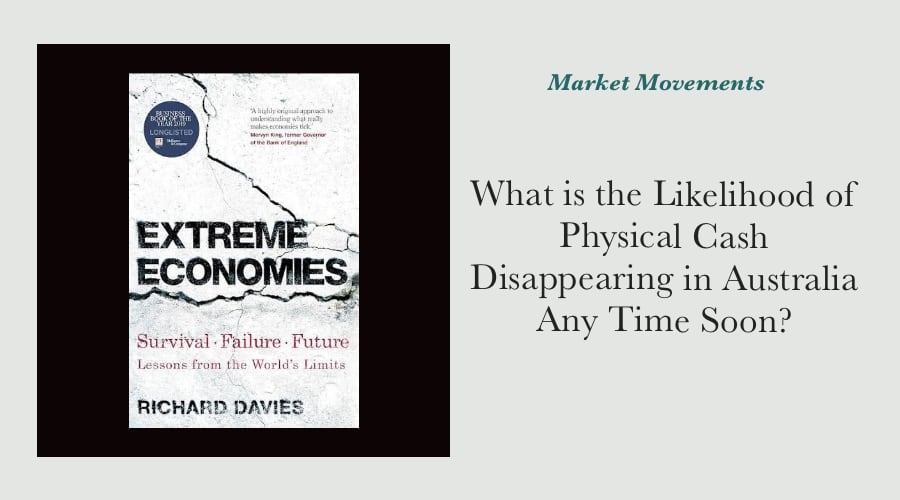
I did enjoy it as an introduction to a personality who I've heard so much about, I also enjoyed the insights into the warrior and military mindset that the book is rich in. It did also have a section that I felt was numismatically (or at least monetarily) relevant. When the Macedonian forces eventually defeated Persia and arrived in Babylon, Alexander is confronted by the challenges of administering the complex Persian Empire, just one of them concerned money. In conversation with Sisygambis (the mother of Darius III, the ruler of Persia that he had just defeated no less!), Alexander learns that "Because all wealth is inducted upward to the king, the people have evolved underground currencies to duck the tax agent." Pressfield's description of the system that the lower classes of Persia adopted to evade something of the oppression they were under doesn't seem to bear up to economic scrutiny (let's not allow the facts to get in the way of a good story), but it reminded me instantly of another book I'd read a few years back that I felt explored a similar theme - Extreme Economies by Richard Davies. Extreme Economies recounts a range of examples of how us human beings adapt and exchange with each other when circumstances prevents or limits it.
How We Humans Keep on Keeping on In the Face of Extreme Adversity
The promotional literature covering the book explains: "Extreme Economies proposes a new way of thinking about economic and social challenges—the careful study of the world’s most extreme economic environments. It is based on 100,000 miles of travel, and over 500 interviews with people living in the most difficult, pressurised and volatile circumstances on earth. From war zones, natural disasters and failed states, to the extremes of aging and the challenges of technological advance the people in this book live on the edge. Their lives tell stories of human resilience—economic, social and personal—how it works and how it can fail. These lives at the edge, often so unlike our own, may seem an odd place to look for clues about the modern economy. But the idea that extremes matter has impeccable provenance—it is a foundation stone of both medicine and engineering that economics has somehow overlooked."
You may well be wondering what the hell all of this has to do with a cashless society coming to Australia, much less coins! I often get asked for my forecast of what the future of numismatics will be when coins eventually disappear from circulation. My first response at the moment is to paraphrase Mark Twain and say "The reports of my death are greatly exaggerated."
Here's Why I Believe Physical Money Will Be Around for Some Time Yet
There are several reasons why I believe coins and cash will be around for some time yet - the existing state of Australia's electronic payments system; the characteristics of the natural environment that our economy operates within and the attitudes of most Australians toward cash and electronic payments as a result of those first two factors.
Make no mistake, electronic payment systems have made much greater leaps in adoption in other parts of the world relative to Australia - China; Norway; India and even large parts of Africa each have electronic payment systems that have been far more widely adopted for a range of reasons.
The Three Main Gaps I See In Australia's Existing Payment System
It costs more to use. Shopping here still runs through the old card networks (Visa, Mastercard, eftpos), and sharp businesses have been permitted to pass those fees on to customers as surcharges, which costs Australians about $1.2 billion a year. All of us pay our portion of that $1.2 billion through surcharges or increased prices. Sterling & Currency pays many thousands of dollars in merchant fees each year, we've never recovered them via a surcharge and haven't adjusted our prices, so they just come off our bottom line. This cost and friction isn't a feature of those systems that have really taken off overseas.
Electronic payments in Australia aren't built into one app people use every day. In China, payments are baked into apps like Alipay and WeChat that people already open constantly for chatting, shopping, and everything else, so paying is second nature. Australia doesn't have anything like that, elecdtronic payments are split across different banks and apps, so it hasn't became as automatic. Yet. It also means peer-to-peer payments between individuals are less safe than they should be: if you send money to someone else via PayID, there's no undo button and no refund process. The check that's meant to confirm you're paying the right person is unreliable, which is exactly how a lot of Marketplace and Gumtree scams happen.
Our existing electronic payment system leaves unbanked people behind. Places like Kenya built mobile payments to work over the phone network itself, so even people without a bank account can use it. Australia's system only works if you already have a bank account, and over 600,000 Australians don't have one (or barely use one). That number has actually grown fast in just a few years, at the same time as this drive to remove cash from daily life. I'm not suggesting there's a great deal of compassion or awareness within the general population of the cost this imposes on marginalised people, but for better or worse, we are still a country where folks in various levels of government and in not-for-profit enterprises make an effort to limit major changes like this leaving swathes of people behind.
These deficiencies, as well as the timeline that's likely going to be needed to address them, mean I don’t see cash disappearing completely any time soon.
Australia’s Natural Hazards Are Payment-System Hazards
Lots of foreigners worry about Australia's spiders, snakes, crocs and drop-bears, but they aren't anything like a threat to our electronic payments system.
It is the bushfires, floods, cyclones and storms that ravage our continent that have and can interrupt electricity, telecommunications, roads and cash replenishment all in one fell swoop. The 2024 Regional Telecommunications Review heard of communities losing telecommunications for weeks following natural disasters. We had a client a few years back who sold us some shipwreck coins, he was a recently-retired sargeant in the WA Police. His last posting was in a remote town somewhere "Up North", he said they were cut off for 2 weeks via a flood. Nothing too unusual in that but the power and internet went out, so the bank had to do everything manually (think click clack machines for those of you of a certain age). By the time the power was put back on, he said he was standing in the bank premises with his sidearm visible literally keeping the peace. People he knew quite well were losing their minds at the inability to get cash to buy food or alcohol, he believed that if had gone on for just a few more days there would have been a riot.
Digital payments are obviously reliable during normal conditions. The real challenge to the system lies in systemic failure: one event can disable mobile towers, merchant terminals, internet connections and the ability to recharge phones.
Cash is valuable in times like that not because it’s technologically superior, but because it still works just fine when the internet is out.
I remember back to those terrible bushfires back in NSW and the ACT a few years back and the queues at service stations of people trying to flee one particular regional area. Those that had cash could buy fuel, those that didn't were stuck.
A truly resilient payment system needs components that don’t share every point of failure.
Sweden has been at the vanguard of the digital payment revolution, but since Russia has attacked Ukraine, they've begun to reconsider the value of cash due to the obviously heightened security and civil-defence concerns.
In Australia, I reckon we're slowly starting to become realise computerised payments are excellent right up until the computers go dark, in which case having a few dollars cash can be an excellent plan B. Being in the middle of nowhere after a fire, flood or cyclone without the means to buy food has to be a tough spot to be in.
Australia’s Characteristic Attitude: Adoption Without Surrender
We Australians have clearly been happy to adopt digital payments because they're convenient, but many are reluctant to see them morphing into something we can’t exist without.
This attitude reflects several facets of the Australian ethos:
* A pragmatic acceptance of government services combined with suspicion of bureaucratic intrusion;
* A preference for consumer choice and competing institutions;
* Sensitivity to compulsory schemes that link multiple areas of life;
* Memories of data breaches, automated administrative failures and banking misconduct;
* Attachment to the idea that ordinary transactions should not require justification;
* Skepticism about whether a power that is currently limited will remain limited.
For many people, “government overreach” is also shorthand for a wider problem that involves corporations. That concern may actually be about the combined weight of:
* Government agencies;
* Banks;
* Card networks;
* Digital-identity providers;
* Tech platforms;
* Automated fraud and compliance systems.
Whether it's a level of government that's imposing a restriction or a business, I see the average person pushing back as a natural response. Moreover, I see the examples cited in The Virtues of War and also Extreme Economies as being perfect case studies in how folks will react if the establishment pushes digital payment options on the populace too soon, that is before the above problems are addressed to a level that the average person feels is necessary. Enterprising humans adopt paralell payment methods to work around systems they believe are pernicious or aren't up to standard. I'm not saying we'll be swapping cigarettes; gold jewellery or powdered milk in the face of a cashless society, but I have no doubt some form of that would emerge if the change to remove physical cash is rushed.
The last abrupt major change we had to our national payments was probably the introduction of decimal currency 60 years ago. That took many years of planning, so coins have time on their side, for the time being at least!

Comments (2)
Credit card surcharges
By: Rob T on 3 August 2026Hi- very interesting article thank you. When published though only 2 months before the long-announced credit card surcharges disappear on 1/10/26 (for the majority of cards), I think that should be included in your commentary as it becomes a moot point about the cost of those transactions costing more. That closes out one of the 3 main gaps you highlight. Just food for thought. Cheers :)
Sterling and Currency Response
Rob, I accept that the new regulations will mean that businesses will no longer be able to explicitly pass on credit card fees to customers via a surcharge. That does not mean that expense or cost suddenly disappears though! It will just be borne by businesses, passed on in increased prices where possible.
Disappearing Cash/Banknotes
By: Ralph Ditton on 2 August 2026Excellent article Andrew. You only have to go back to the 1920's here in Australia where cash and banknotes were scarce in the countryside and banks few. (Same now due to closures). Shinplasters came to the fore to fill the gap despite the government's efforts to ban them. Regards Ralph
Sterling and Currency Response
An excellent point Ralph! Copper and silver trademan's tokens were also around in the century before, so there are multiple examples in Australia of what can happen when the regulatory environment doesn't support trade within the general population.