
A Numismatic Tour of Western Australia
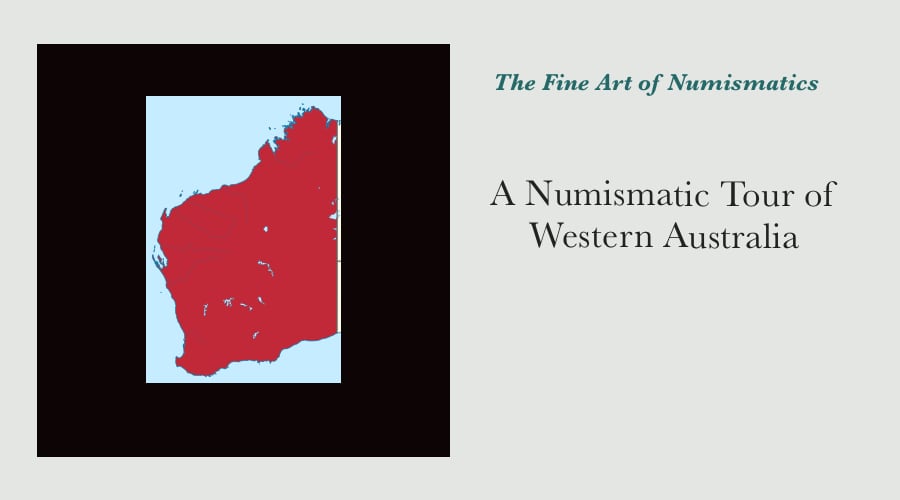
It was my turn to give a talk to my fellow members of the Perth Numismatic Society (PNS) a few weeks back, specifically on the topic of Fremantle's prominence in numismatics. While Fremantle does have direct links to a range of numismatic items (some well known, others less well known), I extended the umbrella to cover numismatics in Australia's Western Third.
I've already outlined the contents of a book that will cover Western Australia's numismatic history, so rather than take that dry approach to a talk that was asked to span no more than 25 minutes, I chose to touch on a few key points that I hoped would bring the economic history of our State to life. After the event, a few of the members asked if there was something they could read to explore the subject further. The article that follows is a first draft to help guide collectors interested in learning more about numismatic items that are particular to Western Australia.
A Rough Timeline of Numismatics in Western Australia
Economic Exchange in Indigenous Culture
Any meaningful exploration of the economic history of a land as old and timeless as Western Australia must account for the relics of indigenous economies as well as those known from colonial times to today.
The history of white settlement on the Australian continent spans little more than the past two centuries, while the indigenous culture of Australia extends back "...thousands of years prior to colonisation. There are varying estimates for how long Aboriginal and Torres Strait Islander peoples have lived on this continent, however, upwards of 60,000 years is what current research reveals."
Accounting for what are effectively the relics of two different forms of economy may not be neat or tidy, but members of the world's oldest continuous living culture clearly provided for their families for countless generations. I hope that future research will frame that economic history in a numismatic context, we have much work to do here.
 Coinage Linked to the Australian Continent Before White Settlement
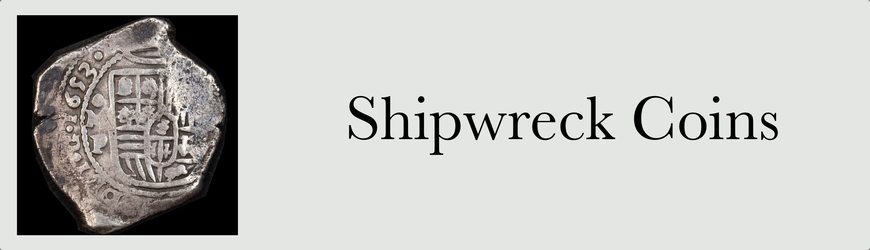
Shipwrecks have been a part of the Australian coastline for centuries, and their remains offer a fascinating insight into the country's maritime history. Coins have been recovered from four of the most notorious wrecks around Australia's coast: Batavia, Gilt Dragon, Rapid and Zuytdorp.
Each of those wrecks has an incredible story behind it, media records show that interest in the European shipwrecks found off the coast of Western Australia has captivated locals in this part of the world as early as the 1830's, when the Swan River Colony was first settled.
These coins provide an invaluable source of information about the ships they were recovered from, and offer insights into the movement of capital around the world during this period. Not only is the story behond each ship's journey to the Australian continent worth exploring, so is the account of each wreck being tracked down discovered. Then, the recovery of the coins from each wreck site is just as compelling!
We are one of the most active dealers in the country in this area and have deep expertise in the background of the coins recovered from each wreck.
The Coinage of Colonial Western Australia
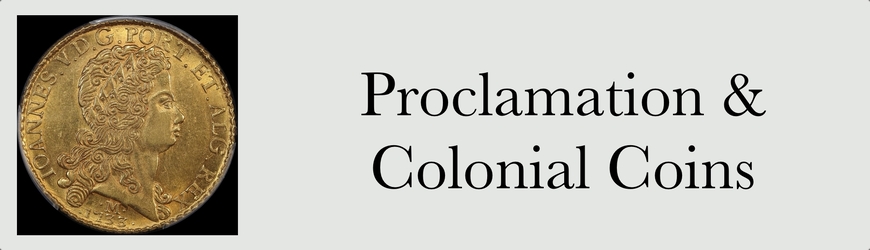
While living in the great state of New South Wales, I wrote a book that was published by the Powerhouse Museum titled "The Coinage of Colonial Australia" which explores the coins used in Australia's colonies before the Sterling coinage of Great Britain was adopted officially and comprehensively. The launching point used to explore that complex era is the list of 10 coins officially designated or "proclaimed" by Governor Gidley King for use in official transactions.
The proclamation coins of New South Wales are no more or less important than any of the coins used on the Australian continent before 1826 (when sterling coinage replaced the piecemeal foreign coins that plugged the gap prior to that), there is an equivalent list of "proclamation coins" linked to Western Australia. These are of special interest to those of us who call ourselves Sandgropers.
Tradesman’s Tokens Used in Western Australia
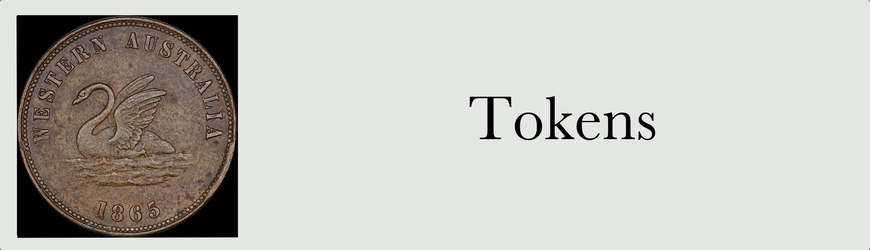
Tradesman's tokens are linked to use in Australia as early as the early 1800's, and were used extensively in the latter part of the 19th century. There are two token issuers in Western Australia that collectors are familiar with: Alfred Davies and John Henderson, both from Fremantle.
Western Australia also claims another humble copper disc that was used in exchange and is unique in Australian numismatics - the checkpiece struck for a brothel in Kalgoorlie in the early 1900's.
Privately Issued Paper Notes Used in Western Australia
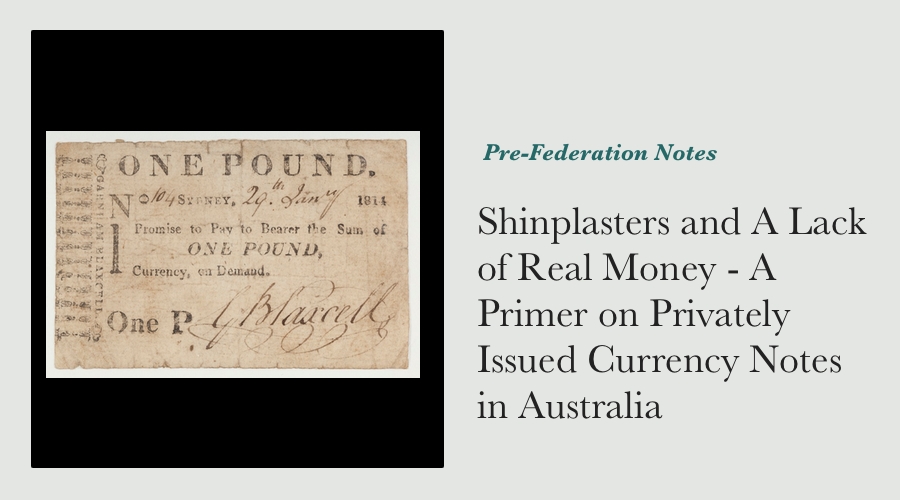
The Swan River Colony was settled in 1829 yet the first bank wasn't established until 1841, a national currency wasn't issued until 1910. Into the breech entered a range of private trader's such as George Shenton and Scott & Gale who issued their own paper currency notes and honoured them in the absence of the paper money issued by greater economic entities.
Pre-Federation Notes in Western Australia
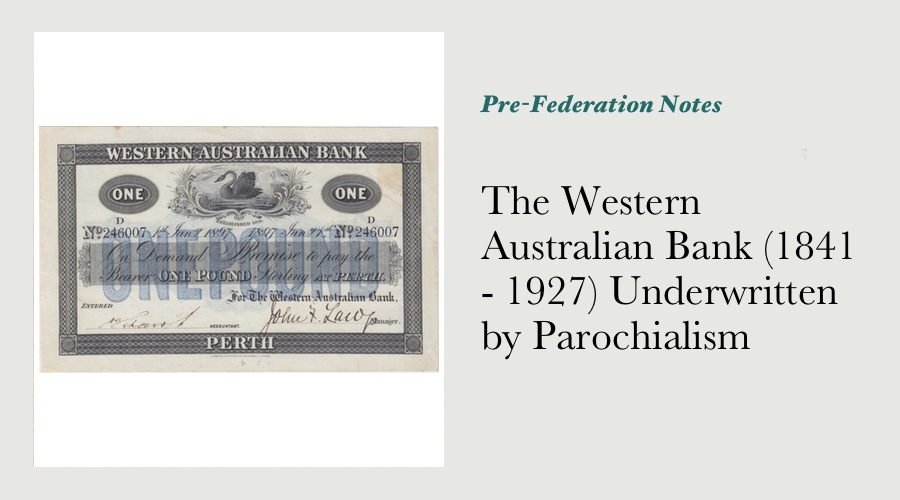
The pre-federation banknotes issued in Western Australia prior to 1910 embody the drive to capture the abundant natural wealth in Australia's western third, and are a reminder of a time when the leading financial institution in this part of our nation was founded, run and patronised by the people that lived and worked here. There were more banks than just the Bank of Western Australia, this is a truly rewarding period in our economic history.
Circulating Gold Coins Struck by the Perth Mint
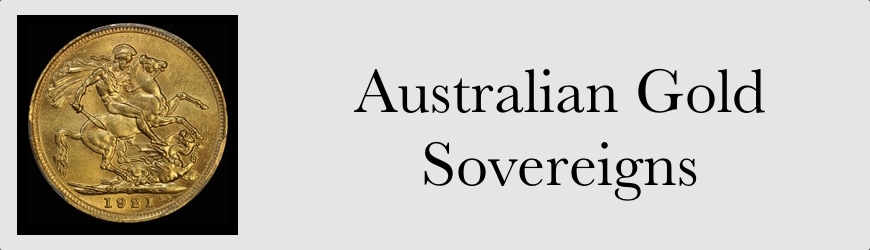
Historians agree that the discovery of gold in Western Australia in 1893 had a fundamental impact on our economy, our society and our identity. The first Australian gold sovereigns were produced at the Perth Mint in 1899, and were made right through until 1931. Half sovereigns were struck between 1901 and 1918, in much smaller numbers. The Perth Mint sovereign set is popular with collectors right around the country, while a set of half sovereigns struck by the Perth Mint has challenged collectors around the world for generations.
 Copper & Silver Pre-Decimal Coins Struck by the Perth Mint
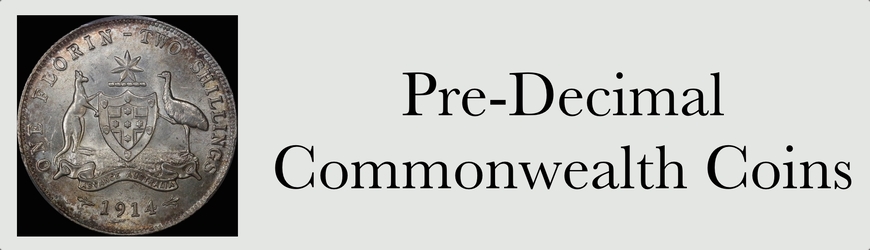
Although the majority of the copper and silver coins used in Australia between 1910 and 1964 were struck by the Sydney and Melbourne Mints, the Perth Mint struck a few rarities that collectors will be familiar with and contributed greatly to the national circulating coinage from WWII onwards. The 1922 penny with the Indian obverse; the 1942-Y halfpenny and the 1946 double dot shillings are all products of the Perth Mint.
Decimal Banknotes Linked to Western Australia
The DBP $1 note is one that has been enthusiastically pursued by decimal note collectors for decades, although it's perhaps only in the past decade or so that collector interest has started to drive their value to a level that matches their historical appeal and rarity.
They are the first Australian notes to have been officially confirmed as being a very limited run of test notes, and they are the only Australian notes issued since Federation that have been proven to be directly related to several Australian cities - Perth, Brisbane and Hobart. The mintage of one million notes is exactly the same as the Coombs & Wilson first and last prefixes, and nearly as low as some star replacement notes - all of these notes are at present worth much, much more.
Circulating Decimal Coins Struck by the Perth Mint
The Perth Mint struck 1c and 2c coins for a number of years after the introduction of decimal currency in 1966. Some of the rarest examples of those denominations hail from the Perth Mint.
Gold, Silver and Platinum Bullion Coins Struck by the Perth Mint
Four decades after the Perth Mint struck its first gold bullion coins, Perth Mint gold coins featuring the Australian kangaroo are now widely ranked among the most popular bullion coins made anywhere in the world. World renowned for their exceptional quality, beauty and rarity, the Kangaroo Nugget coin series is highly sought after by investors as far and wide as Canada, Germany and China.
Non Circulating Legal Tender Coins Struck for the Collector Market by the Perth Mint
The Perth Mint is consistently ranked among the world's premier minting facilities. Its proof and collector coins are prized for exceptional die quality, sharp relief, and mirror-like fields. The frosted cameo finish on proof strikes is considered world-class.
Perth has pioneered many numismatic firsts — coloured coins, coin-in-coin technology, ultra-high relief strikes, and the use of unusual shapes (rectangles, domes, etc.). The Lunar Series, Kookaburra, Koala, and Kangaroo programs have multi-decade collector followings globally. More recent ultra-luxury releases like the Jewelled Series (Phoenix, Dragon, Tiger) command extraordinary premiums and attract UHNW buyers.
